n8n vs Zapier: Why Teams Switch (and How to Migrate)

n8n vs Zapier: Why Teams Switch (and How to Migrate)

Founder of Goodspeed

Zapier made automation mainstream. It is polished, enormous in its app coverage, and genuinely easy to start with, which is exactly why so many teams have it. n8n comes at the same problem from a different angle: open, self-hostable, code-friendly, and priced so that scale does not punish you. Comparing them is really about where you are and where you are heading.

This is not a case of one tool being good and the other bad. Zapier is superb for what it is, and for a lot of people it is the right answer. But there is a point in a team's growth where its pricing model and its limits start to bite, and that is the point where n8n becomes compelling. Knowing which side of that line you are on is the whole decision.

We build automation on n8n, so we have a view, but we will be straight about where Zapier wins. This guide compares what each does best, how they price, how they differ on control and data, and how to migrate if you decide to make the switch.

What each tool is really for

Zapier is a hosted, no-code automation platform built around simplicity and reach. Its whole design optimises for getting a non-technical user from idea to working automation in minutes, with thousands of pre-built app integrations and a linear, approachable builder. You never think about servers, and you rarely think about how anything works underneath, which is the point.

n8n is a source-available workflow automation platform you can self-host or run in its cloud. It uses a visual node canvas but assumes you are comfortable going deeper, with custom code, branching logic, and full control over where it runs. Where Zapier hides the machinery, n8n hands it to you. The two overlap heavily in what they can automate, but they are built for different appetites for control and complexity.

Where Zapier genuinely wins

Give Zapier its due, because it is excellent at what it targets. Its app directory is vast, and for obscure SaaS tools you will more often find a ready-made Zapier integration than an n8n node. If your automation is a handful of simple connections between popular apps and you never want to think about infrastructure, Zapier gets you there faster and keeps it running with zero maintenance.

The polish matters too. Onboarding, templates, and the general experience are aimed squarely at non-technical users, so a marketer or an operations lead can build something useful without help. For a small team with light automation needs and no appetite for managing anything, Zapier is often simply the right call. Choosing it is not a failure to see the light. It is matching the tool to a real situation.

Where n8n pulls ahead

n8n's advantage shows up the moment your needs get more demanding. Complex branching, loops, and conditional logic that feel constrained in Zapier are native here. When no integration exists, an HTTP Request node talks to any API, and a Code node lets you write real JavaScript or Python to do whatever the situation requires. You are not limited to what the platform anticipated.

Self-hosting is the other differentiator. Because you can run n8n on your own infrastructure, sensitive data never has to leave your control, and you can integrate with internal systems that a cloud-only tool cannot reach. Add its flat, execution-based cost model and n8n becomes the platform that keeps making sense as your automation grows more sophisticated and more voluminous, rather than one you outgrow.

The pricing model is the crux

The single biggest practical difference is how you pay. Zapier charges by task, where each action step in each run consumes from your monthly allowance. That is fine at low volume, but as your automations succeed and run more often, the task count climbs and so does the bill. A busy multi-step Zap running thousands of times a month can get expensive quickly.

n8n changes the shape of the cost. Self-hosted, you pay for the infrastructure it runs on, not for each task, so a workflow can fire tens of thousands of times without the bill moving. n8n's cloud plans price by workflow executions rather than per task, which is already far kinder to multi-step automations. For any team running automation at real volume, this difference alone often decides the matter.

Control and flexibility

Control is where the two philosophies diverge most. Zapier deliberately abstracts the underlying mechanics away, which is what makes it easy but also what caps you when you need to do something it did not plan for. You work within its steps, its filters, and its formatter, and when you hit the edge of those, your options narrow.

n8n assumes you will eventually want the edges. You can branch a workflow into multiple paths, loop over data, merge streams back together, and drop into code anywhere the built-in nodes fall short. You control retries, timeouts, and error handling in detail. This flexibility is exactly what a growing team needs as its processes get more particular, and it is why automations that would require awkward workarounds in Zapier are often straightforward in n8n.

Data, privacy, and where it runs

With Zapier, your data flows through Zapier's cloud by definition. For plenty of use cases that is perfectly acceptable, but for teams handling sensitive customer records, or operating under strict privacy or compliance rules, sending everything through a third party is a real concern and sometimes a dealbreaker.

n8n's self-hosting option removes that concern entirely. Run it on your own server and your data stays on infrastructure you control, never passing through anyone else's systems. You decide the region, the retention, and the access. For regulated industries, or simply for teams that would rather keep their data close, this control is one of the strongest reasons to choose n8n, and it is something a purely hosted tool cannot offer.

Ease of use and the learning curve

It would be dishonest to pretend n8n is as instantly approachable as Zapier. Zapier's linear builder is about as gentle as automation gets, and a complete beginner can ship something useful on day one. n8n's node canvas is more powerful, and with that power comes a steeper initial climb, especially once you start using code and complex branching.

That said, the gap is often overstated. Many teams find n8n's visual flows genuinely clear once they are past the first hour, and the payoff is that the ceiling is far higher. The honest framing is a trade-off: Zapier optimises for the first ten minutes, n8n optimises for the long run. If you value the fastest possible start above all, Zapier wins that round. If you value not hitting a wall later, n8n does.

Integrations and extensibility

On raw integration count, Zapier leads, with a directory that covers an enormous long tail of apps. If your workflow depends on a niche tool, checking whether Zapier already supports it is worth doing, because a ready-made integration saves real effort. This breadth is one of Zapier's most durable advantages.

n8n counters with extensibility rather than sheer count. It ships with hundreds of nodes and a growing library of community nodes, and where none exists, the HTTP Request node connects to any REST API directly. In practice that means n8n can integrate with almost anything, it just sometimes takes a little configuration rather than a single click. For teams comfortable with that, the effective coverage is close to unlimited, which changes how the integration comparison actually plays out.

When to switch from Zapier to n8n

The clearest trigger is the bill. When your Zapier task usage pushes you onto an expensive tier, and the automation is only going to run more as you grow, the economics start pointing firmly at n8n. If you are regularly bumping into task limits or rationing which automations you build to control cost, that is a strong sign you have outgrown the model.

Capability is the other trigger. If you keep hitting things Zapier will not let you do, needing custom code, complex logic, or an integration that does not exist, or if data privacy has become a requirement, n8n solves all of those at once. You do not have to switch the day you feel the first pinch, but when cost and capability both point the same way, the move usually pays for itself quickly.

How the migration actually works

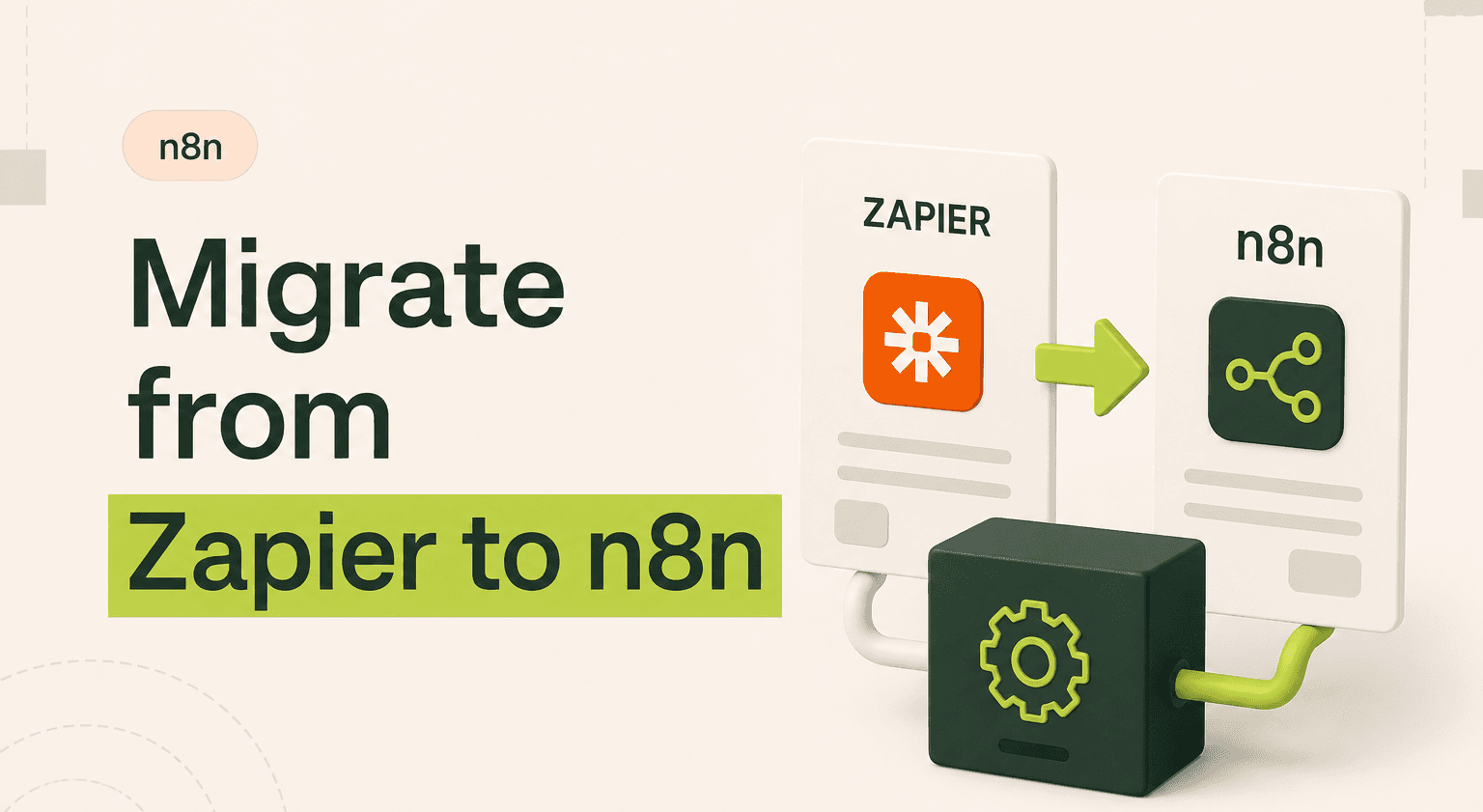
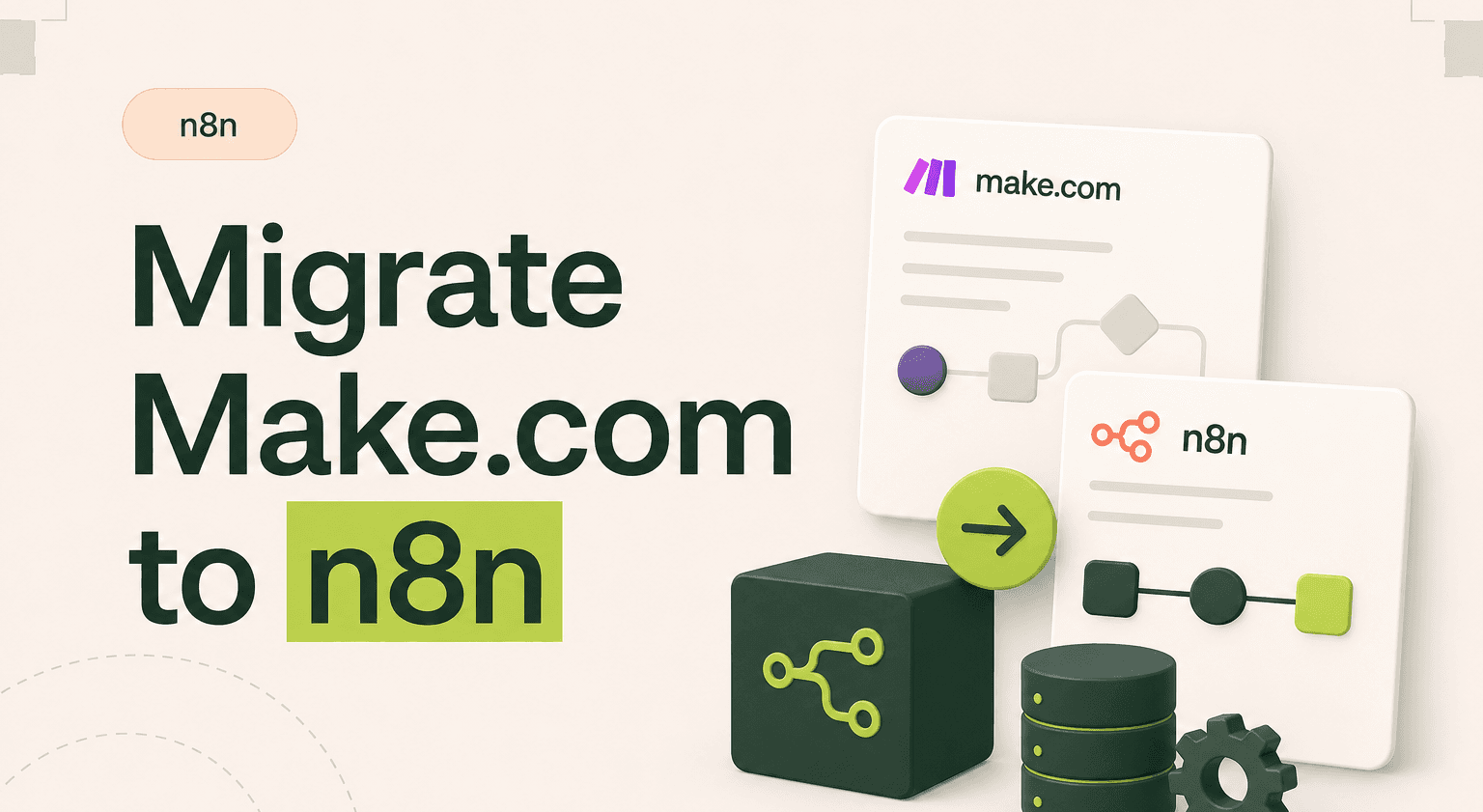
Moving from Zapier to n8n is very doable when you approach it in order. Start by auditing every Zap so you know exactly what you have, then prioritise by importance and retire anything that is broken or no longer needed. The concepts map cleanly: each Zap becomes a workflow, its trigger becomes a trigger node, and its steps become nodes on the canvas.

Rebuild rather than copy blindly, because it is a chance to shed the workarounds a Zap accumulated, and reconnect each app with fresh credentials scoped to only what is needed. Test each workflow in isolation, run it in parallel with the live Zap to confirm the outputs match, then cut over in waves with the old Zap paused as a fallback. Done this way the migration is low-risk and reversible at every step.

A fair verdict

Neither tool is universally better, and anyone claiming otherwise is selling something. Zapier is the right choice for teams that want the simplest possible start, the widest app directory, and zero infrastructure, with automation needs that stay modest enough that per-task pricing never hurts. For a lot of small teams, that description fits and Zapier is the sensible answer.

n8n is the right choice for teams whose automation is growing in volume, complexity, or sensitivity, and who want control, flexibility, and predictable cost as they scale. It asks a little more of you up front and rewards you with a platform you will not outgrow. If you see yourself heading toward serious, high-volume, custom automation, that is where n8n earns its place and where we would point you.

Switch when Zapier stops scaling with you

Zapier and n8n are both strong tools aimed at different points in a team's journey. Zapier wins on the gentlest start, the broadest integrations, and zero maintenance, and for light automation that never pushes its task limits it is genuinely the easier answer. n8n wins on cost at scale, deep flexibility, custom code, and the ability to keep your data on infrastructure you own.

If your automation is growing in volume or ambition, or the Zapier bill has started to sting, n8n is very likely where you are heading, and migrating is straightforward when done in waves. If you want a team that builds automation you own, see our n8n case studies, including HubSync, or book a free call with our n8n team.

Harish Malhi - founder of Goodspeed

Written By

Founder of Goodspeed