Short answer: the best Bubble agency for SaaS is one that has taken a product to paying users, can show multi-role permissions, Stripe billing and integrations running in production, and stays on after launch to tune performance. Below we compare five agencies that build SaaS on Bubble: Goodspeed (us), AirDev, Idea Link, Evodev and Kreante.
We are one of the five, so read the comparison with that in mind. That is why we also set out the criteria we would use to judge any agency, including us, plus cost benchmarks, a build checklist and SaaS products we have shipped on Bubble. If you are still deciding on the platform, start with our guide to building a SaaS app with Bubble.
TL;DR: Best Bubble Agencies for SaaS Development in 2026
Agency | Avg Build Time | Starting Budget | Support SLA | Notable Client/Project | Bubble Partner Tier |
4 to 8 weeks (some MVPs in 5 days) | ~$15K+ | Full product team, | ProMagic (100 paying magicians at launch), MyAskAI (platform costs halved in 3 weeks) | Gold (2024 Agency of the Year) | |
AirDev | 4 to 8 weeks | From $10K | Dedicated team, post-launch support | Dividend Finance (rebuilt fintech MVP used by thousands) | Gold |
Idea Link | 4 to 12 weeks | €10K to €30K | Sprint-based, with QA & performance follow-ups | ERP for Telecom (GPS and map features) | Silver |
Evodev | ~6 weeks | Not published | Check with agency | Goodcourse (B2B learning platform, YC 2023), | Gold |
Kreante | Varies by scope | ≥ $10,000; $50, $99/hr | Responsive, structured, ongoing support | Check with agency | Silver |
The five Bubble agencies compared here are Goodspeed (us), AirDev, Idea Link, Evodev and Kreante. All five build SaaS on Bubble; they differ on team size, process and post-launch support.
Key factors when choosing: multi-tenant architecture experience, Stripe integration expertise, scalability optimization, and post-launch support
Why Bubble for SaaS App Development?
The SaaS market rewards teams that ship fast. According to FE International, the global SaaS market is projected to reach $512 billion in 2026 and grow to over $908 billion by 2030. For non-technical founders, Bubble offers a way to capture market share without waiting months for an engineering team.
Bubble lets non-technical founders build real SaaS products without writing code. The visual editor handles complex logic, APIs, databases, and user authentication. Strategically, that means faster time-to-market and lower costs compared to hiring a full engineering team.
For SaaS specifically, Bubble handles the patterns that matter: multi-tenant data isolation, role-based access, subscription billing via Stripe, and scalable infrastructure on AWS. It is not a toy. It is a platform we have used to take SaaS products from prototype to paying customers, as the examples further down show.
Comparison to Alternatives
Traditional Development: Coding a SaaS app from scratch (e.g., using React, Node.js, and AWS) requires skilled engineers, months of development, and high costs (often $50K+ for an MVP). Bubble can accelerate this process to weeks, with built-in hosting and scaling, reducing DevOps overhead. However, traditional development offers more flexibility and performance optimization for highly specialized needs, such as machine learning integrations or real-time high-frequency systems.
Bubble vs Traditional development
Other No-Code Tools:
Glide: Excellent for mobile-first apps sourced from spreadsheets but lacks Bubble's capabilities in complex workflows, robust API integrations, and flexible user authentication, making it less ideal for advanced SaaS products like multi-tenant dashboards. Bubble vs Glide
Adalo: Focused on creating native mobile applications, it is not optimized for web-based SaaS scalability or advanced backend features such as robust database management or recurring payment systems. Bubble offers more robust web-based infrastructure and supports features like Stripe integration natively. Bubble vs Adalo
Bubble stands out for SaaS due to its blend of visual development, built-in scalability, and flexible plan pricing, enabling teams to go from prototype to production without the tight vendor lock-ins found in some other platforms.
Key Features of Bubble for SaaS App Development
Bubble offers tools tailored for SaaS development, including user authentication, data privacy, and monetization. Here are 4 especially useful capabilities:
Dynamic Data Handling and Workflows: Bubble's visual database and workflow builder enable creation of custom logic for user interactions such as onboarding, subscription management, or real-time updates. This is critical for SaaS apps that require personalized user flows without traditional backend coding.

Built-in User Authentication and Privacy Controls: Bubble provides out-of-the-box secure login systems, role-based access control (e.g., admin vs. user), and data protection features for multi-tenant applications. Privacy rules help with compliance requirements like GDPR and data segmentation.
API Integrations and Plugins: Bubble allows robust integration with external services such as Stripe, SendGrid, and Zapier through plugin or API connector features, supporting use cases like invoicing, notifications, and third-party data syncing. Subscription billing and payment processing can be implemented without third-party middleware.
Scalability and Performance Tools: Bubble supports auto-scaling via capacity units and includes infrastructure such as version control, responsive design tools, and SEO optimization. While not designed for extremely high-load, real-time apps, Bubble is capable of supporting thousands of users with appropriate app optimization.
Book a free consulting call with Goodspeed

Work with us
Plan your app around your users
Discuss your product idea, essential workflows and platform requirements with our team.

Our Evaluation Framework
We Evaluated agencies for our “Top Bubble Agencies for SaaS App Development” list based on rigorous, SaaS-specific criteria. This ensures recommendations align with the unique demands of building scalable, subscription-based apps like multi-tenant architectures, recurring billing, and data security. Here's how we rank them:
Proven SaaS Portfolio Depth
We prioritize agencies with a track record of delivering Bubble-built SaaS apps that handle user authentication, tiered pricing models, and API integrations, verified through case studies showing real-world scalability for at least 1,000+ active users.
Bubble-Specific Technical Expertise
Agencies must demonstrate advanced proficiency in Bubble's workflows for SaaS needs, such as custom states for dynamic dashboards and privacy rules for multi-tenant data isolation, assessed via app audits and platform certifications currently offered through Bubble’s agency program.
Scalability and Performance Optimization
Rankings favor those optimizing for high-traffic SaaS scenarios, including database structuring techniques like optimized searches, reusable elements for faster load times, and real-time performance monitoring using Bubble’s built-in tools and third-party services.
Integration Capabilities with SaaS Tools
We evaluate connections to core SaaS tools like Stripe for subscription billing and payments, Zapier or Make for workflow automations, and analytics tools like Google Analytics and Segment, ensuring agencies accelerate implementation of core SaaS features.
Client Success Metrics and Feedback
Top spots go to agencies with quantifiable outcomes, such as accelerating time-to-MVP for SaaS clients, supported by testimonials and case studies showing ROI from improved activation rates, reduced churn, and sustained user growth.
What to Look for in a SaaS Development Agency
Hiring a Bubble agency for SaaS is a different decision than hiring one for a landing page or a simple tool. SaaS products have specific requirements that not every agency understands. There is a wide gap between agencies that build SaaS products for production and those that build prototypes dressed up as products.
Multi-tenant architecture experience. SaaS products need data isolation between customers, role-based access controls, and account hierarchies. Ask whether the agency has built multi-tenant apps before and how they handle privacy rules in Bubble.
Subscription billing and payment integration. SaaS revenue depends on reliable billing. The agency should have direct experience with Stripe subscriptions, usage-based pricing, free trials, and upgrade/downgrade flows inside Bubble.
Database design for scale. Poor database architecture is one of the most common reasons Bubble SaaS apps hit performance walls. The agency should talk about Workload Unit optimization, query efficiency, and data modeling before they talk about design.
Post-launch iteration support. SaaS products are never "done." The agency should offer ongoing support for feature development, performance tuning, and scaling, not just a build-and-handoff model.
Proof of outcomes, not just deliverables. Ask for case studies with metrics: MRR growth, user retention, time to market, or funding raised. Deliverables are easy to promise. Outcomes are what matter.
Top 5 Bubble Agencies for SaaS App Development
Goodspeed
We are a London and US product studio and a Bubble Gold partner, named Bubble Agency of the Year in 2024. We build SaaS products, marketplaces and internal tools on Bubble, and we also fix live Bubble apps that are straining under growth, as we did for MyAskAI.
We take a scale-first approach: apps are architected from day one to support growth across pricing tiers, user roles, and usage volumes without costly rebuilds. Our team brings deep platform expertise and a structured sprint model focused on clean database design, modular workflows, and performance under load.
We handle Stripe billing, multi-role access and integrations with OpenAI, Zapier, Segment and others in-house.
Post-launch, we continue to support growth with async sprints for feature rollouts, AI model tuning, and UX polish, making us an ideal partner for founders ready to scale without hiring a tech team.
Work with us
Build the right foundations for your app
Talk through your data, integrations and development scope with Goodspeed before you build.
AirDev
AirDev is one of the longest-standing Bubble agencies, with over 1,000 projects delivered since 2015 across SaaS platforms, marketplaces, and internal tools. They’re best known for their proprietary Canvas framework, which standardizes builds for speed and consistency while covering core features like user roles, secure auth, and payment flows.
Their team includes rigorously vetted Bubble developers and a strong process for handling complex architectures - especially multi-tenant logic, API integrations, and data privacy.
As a certified Bubble Gold Partner, AirDev is a solid choice for teams needing structured delivery and reliable scale, having supported apps with large user bases and high-volume transactions. While their builds lean on reusable templates, they’re capable of delivering sophisticated apps that grow with your business.
Idea Link
Idea Link is a seasoned Bubble agency known for building robust SaaS platforms and internal tools across industries like finance, telecom, and life sciences. They have delivered 30+ products, including a full-scale ERP and project management system for a telecom firm.
Their 20+ person in-house team (with developers who have coding backgrounds) brings advanced technical skill, often extending Bubble’s native limits with custom plugins and backend integrations. As a Bubble Silver Partner, Idea Link prioritizes scalable architecture from day one, using optimized searches, custom states, and reusable components to ensure apps stay fast as they grow.
They’re especially comfortable with hybrid stacks, frequently pairing Bubble with services like Xano, Stripe, and Mapbox, and even building proprietary integrations when off-the-shelf plugins fall short - making them a reliable choice for complex SaaS apps that demand both flexibility and scale.
Evodev
Evodev is a nimble no-code agency specializing in Bubble-powered SaaS products, process automation platforms, and AI-enabled applications. With 148 apps built on Bubble, they combine speed with technical precision often bringing SaaS products from concept to launch in just 4 to 6 weeks.
Their core team blends Bubble expertise with traditional coding skills, enabling them to push the platform’s boundaries through custom API integrations, tailored backend workflows, and performance-focused database design. They’re adept at building scalable, maintainable systems from day one, using optimized search structures, reusable elements, and modular logic to keep SaaS apps responsive as user bases grow.
Kreante
Kreante is a Bubble agency with a global footprint, delivering SaaS platforms and internal tools for clients across North America, Europe, and Latin America. Their portfolio spans industries like logistics, healthtech, and e-commerce, with projects ranging from subscription-based SaaS to multi-tenant platforms serving thousands of concurrent users.
The team’s approach combines Bubble’s rapid development environment with complementary tools like WeWeb, Airtable, and custom APIs, allowing them to build hybrid architectures that balance speed, flexibility, and performance. As experienced low-code practitioners, they emphasize robust data modeling, secure multi-role permissions, and efficient workflows to ensure SaaS products are ready for scale.
Bubble SaaS Products We Have Shipped
Agency lists are easy to write, so here is what we have actually built. Each project below maps to one of the criteria above.
ProMagic: prototype to paying customers. ProMagic had a working prototype and a fixed deadline: the world's largest magic convention. We mapped every user role, designed the database around bookings, contracts and payments, then shipped a booking pipeline, invoicing, Stripe payments, calendar sync and an AI assistant in three months. It launched on time and sold to 100 paying magicians across the UK and Europe.
AWS Hire: three user roles, one matching engine. A niche marketplace for the 1.2 million AWS-certified professionals, serving candidates, hiring managers and an admin team that controls verification and badges. It launched on schedule and matches candidates 70% faster than the search they were used to.
MyAskAI: post-launch scaling. As the AI startup grew, high CPU use on its Bubble platform was driving up costs and slowing its APIs. In three weeks we tuned the heaviest pages, rebuilt the backend around caching and sharper queries, and reviewed more than 500 code references. Costs dropped by half and the platform runs roughly twice as fast.
If you are building a SaaS product and want it architected for paying users from the first release, talk to our Bubble development team about scope, data model and timeline.
Not sure which agency fits your SaaS project? Start with our Signal Sprint to get a scoped project plan, clean data model, and launch roadmap before committing to a full build.
Work with us
Turn your app plans into a clear next step
Bring your priorities, budget and existing product. We can help scope the build and what comes after launch.
Case Study: Teal, a SaaS Built on Bubble
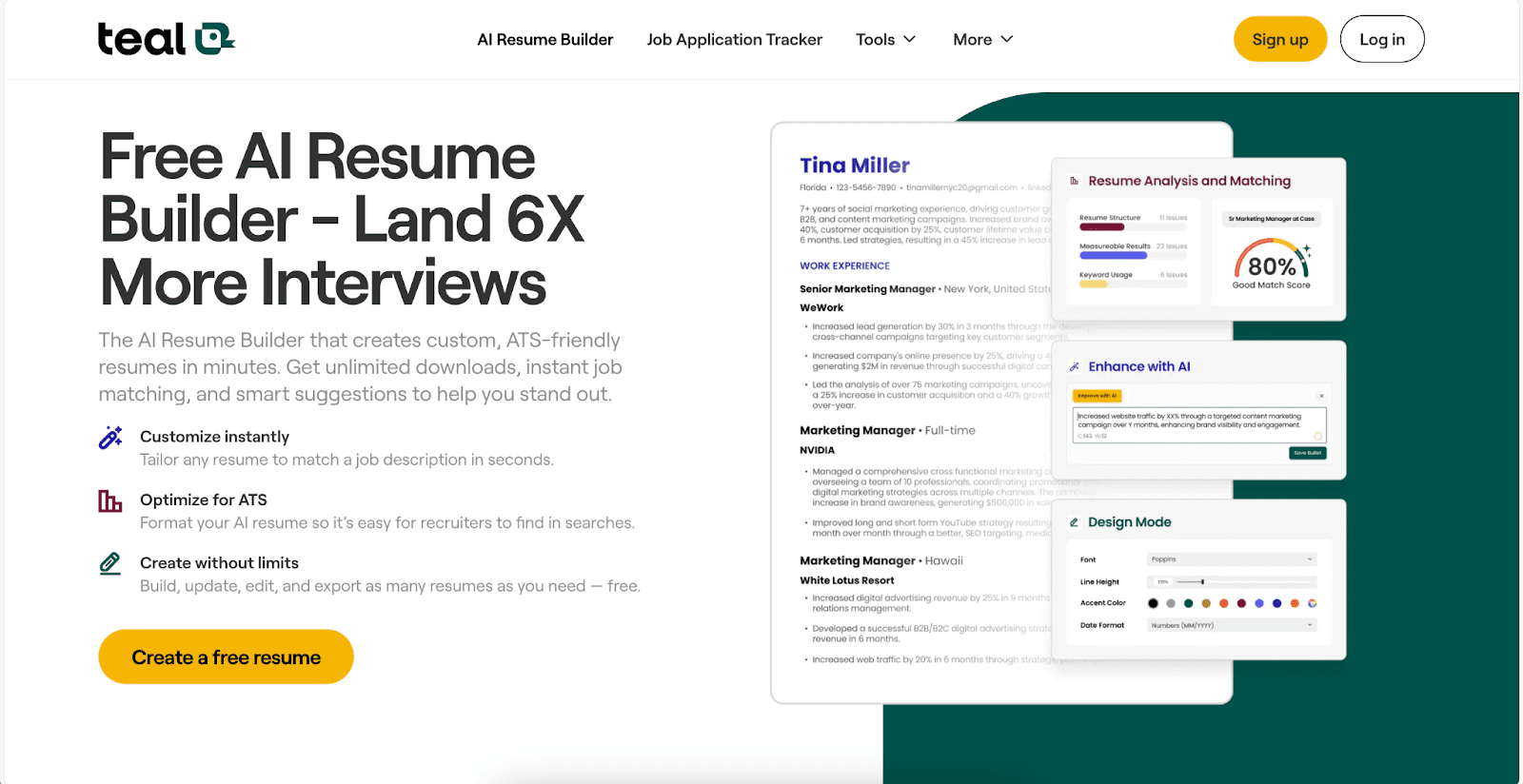
Teal is a standout example of a production-grade SaaS built on Bubble - proving that visual development can go far beyond MVPs. Designed to help users manage their job search, Teal launched with a job tracker, resume builder, and Chrome extension, all powered by Bubble in its early stages. The platform grew to more than 600,000 members and raised $19M in total financing, all while handling real-time updates, third-party integrations, and a growing user base. For teams questioning whether no-code can support investor-backed SaaS at scale, Teal offers a clear answer: it already has.
Cost & Timeline Benchmarks for Bubble SaaS Development
When advising on SaaS app development using Bubble, a no-code platform, it's essential to categorize projects into tiers based on complexity. Simple or MVP builds focus on core features like user authentication, basic databases, and minimal workflows, often suitable for validating ideas quickly.
Standard mid-complexity apps add integrations, custom logic, and moderate scalability, while complex scalable builds involve advanced features like real-time data, extensive APIs, and robust security for high-user loads.
Costs and timelines vary based on factors such as the need for premium plugins (e.g., for payments or analytics), third-party API integrations (like Stripe or Google Maps), custom JavaScript for edge cases, and team involvement, solo developers keep costs lower, but involving designers, testers, or agencies increases them due to coordination and expertise.
Key cost drivers include Bubble's subscription plan (check Bubble's current pricing page, as plans and workload limits change), development hours (typically $50, $150/hour for freelancers or agencies), and post-launch maintenance.
Timelines are influenced by iteration cycles, testing phases, and scope creep; for instance, integrating multiple APIs can extend development by weeks. Always factor in a 20 to 30% buffer for unforeseen adjustments, and note that these are benchmarks from industry reports and Bubble’s official resources - actuals depend on specific requirements and developer efficiency.
Tier | Typical Features | Timeline Range | Cost Range (USD) |
Simple / MVP | Basic user auth, simple DB, core workflows | 4 to 8 weeks | |
Standard / Mid-complexity | Custom UI, moderate integrations (e.g., Stripe, Twilio), light scalability | 8 to 16 weeks | |
Complex / Scalable | Advanced APIs, real-time features, high scalability, CI/CD | 16+ weeks |
Implementation Checklist for Bubble SaaS Development
Scope the Project: Define the core features, target users, and MVP requirements for your SaaS App Development project.
Key questions: What problem does it solve? What are the must-have vs. nice-to-have features?
Deliverable: A project scope document.Plan the Data Structure: Map out databases, user roles, and data privacy needs using Bubble’s data types.
Key questions: What data will be stored? How will users interact with it? Deliverable: A data model diagram.Design the UI/UX: Create responsive page layouts, elements, and styles in Bubble’s editor for an intuitive user experience.
Key questions: How will navigation flow? What branding elements to include?
Deliverable: Wireframes and styled pages.Set Up User Authentication: Implement sign-up, login, and role-based access controls using Bubble’s authentication features.
Key questions: What user types exist (e.g., admins, customers)? How to handle security?
Deliverable: Functional auth workflows.Build Core Workflows: Develop backend logic for key actions including data processing, notifications, and automations using Bubble’s workflow editor.
Key questions: What triggers each workflow? How to handle errors?
Deliverable: Tested workflow sequences.Integrate External Services: Connect APIs, payment processors (e.g., Stripe), or third-party tools as needed for added functionality.
Key questions: Which integrations are essential? How to manage API keys securely? Deliverable: Configured plugins and service connections.Test Thoroughly: Conduct unit, usability, and performance testing across devices and browsers, fixing bugs and optimizing speed.
Key questions: What edge cases to cover? How to gather actionable user feedback? Deliverable: A stable app with test documentation.Launch and Monitor: Deploy to a live domain, implement analytics tools such as Google Analytics, and monitor post-launch metrics using Bubble’s monitoring tools or third-party services.
Key questions: What's the launch timeline? How to manage user scaling?
Deliverable: Live app URL and performance dashboard.
Ready to turn your SaaS app development idea into a validated, launch-ready product? Book a free strategy call with our team today to receive tailored guidance aligned with your vision, helping you reach faster validation and clear launch direction.
The Right Bubble Agency
The right Bubble agency for your SaaS is the one that knows the difference between a working app and a product that keeps paying users as it grows.
Ask how they handle multi-tenant privacy rules. Ask how they design the database for scale. Ask for named case studies with outcomes, not screenshots. And ask what happens after launch, because SaaS products are never finished.
Our own record is public: ProMagic went from prototype to 100 paying magicians in three months, Go Emeritus is a SOC 2 compliant platform with three user roles, verified in Okta's app directory, and Penny Ledger submits tax returns directly to HMRC. There is more in our case studies.
If you are building SaaS on Bubble, talk to our Bubble development team about scope and timeline. Not ready to commit? Start with a Signal Sprint to get a scoped plan and data model first.
Frequently asked questions
What Does a SaaS Development Agency Do?
How Much Does It Cost to Build a SaaS MVP?
Should I Use Bubble or Code for My SaaS?
What Is the Best Bubble Agency for SaaS?
Can Bubble Handle Enterprise SaaS?
How Do I Choose Between Bubble Agencies for SaaS?
What SaaS Features Can Bubble Handle?
How Long Does It Take to Build SaaS on Bubble?

Harish Malhi
Founder of Goodspeed
Harish Malhi is the founder of Goodspeed. He left Google in 2019 to build his own product, and started Goodspeed to give other founders the same head start. Today the studio designs and builds websites and the whole digital experience around them for funded tech companies, at the moments that matter: a raise, a launch, a press cycle. Goodspeed is a Framer Enterprise Expert, was Bubble’s Agency of the Year in 2024, and has shipped 300+ products, including launch pages for an NVIDIA-backed AI lab and a Webby-nominated site for a Boeing-backed aviation company. It holds a 5.0 rating from 46 reviews on Clutch.