TL;DR: Best Bubble Agencies for Marketplace Development in 2026
Agency | Bubble Partner Tier | Avg Build Time | Starting Budget / Pricing |
AirDev | Gold Partner | Variable; weeks for marketplaces & MVPs | ≥ $10,000 |
Rapid Dev | Gold Partner | MVP in 2–4 weeks (web), mobile 12 weeks | $9,999 – $24,999 |
HuggyStudio | Not listed (non-tiered) | Weeks (timeline not explicitly stated) | ~$4,500 |
Zeroqode | Gold Partner | Weeks (not specifically listed) | $49/month – $199 lifetime |
Gold Partner | 4–8 weeks for MVPs/custom builds | $15,000 – $25,000 |
Bubble supports the full marketplace stack: two-sided user interfaces, listings, search and filter, Stripe Connect for payment splits, reviews, and role-based access
Top agencies: Goodspeed (200+ apps, BunkerEx marketplace case study), AirDev (Canvas framework), Rapid Dev (fast builds), Idea Link (data-heavy platforms), Zeroqode (plugin ecosystem)
Key differentiators for marketplace builds: multi-vendor payment handling, supply/demand matching logic, search and filter UX, and review system architecture
At Goodspeed, we ranked #1 for marketplace development because of proven case studies, Bubble native mobile expertise, and a structured sprint model that builds for scale from day one
Why Bubble for Marketplace Apps?
The e-commerce platform market is projected to grow from $13.92 billion in 2026 to $61.83 billion by 2034, at a 20.49% CAGR, driven by AI, mobile commerce, and omnichannel adoption. Bubble's no-code approach lets marketplace founders enter this market at a fraction of traditional development costs.
Comparison to Alternatives
Traditional Development: While building a custom app with code often takes several months and can cost anywhere from $10,000 to $100,000 just for an MVP, Bubble allows you to build and launch fully functional apps yourself - often in a matter of weeks from our experience - for a fraction of the cost. It’s ideal for testing ideas quickly, iterating based on feedback, and staying agile without relying on developers.
Webflow: Webflow is fantastic for building beautiful marketing websites or light CMS-driven content, but when you need complex user interactions, payments, dashboards, or custom workflows, you’ll end up cobbling together several third-party tools like Airtable, Memberstack, and Zapier.
Bubble eliminates the need for that stack by offering built-in user authentication, database management, search/filter capabilities, and workflow automation in a single platform. Webflow may win on pixel-perfect design and visual polish, but for actual apps or marketplaces with user logic and interactivity, Bubble is more powerful and efficient.
Adalo: Adalo is still a strong option for building and launching simple native mobile apps quickly, especially if you're aiming for rapid deployment to iOS and Android with a beginner-friendly interface. But it has limited support for advanced logic, performance under load, and complex backend workflows, making it better suited for MVPs and low-scale apps.
Bubble, on the other hand, now supports native mobile app development through its Native Mobile Builder (beta), while still being the leading platform for building responsive web apps. It allows for building complex, scalable apps - such as marketplaces, SaaS tools, internal platforms, etc. with full control over custom logic & workflows, database relationships, third-party API integrations, backend functionality, and real-time actions & conditional logic.
In summary, Bubble bridges the gap between no-code simplicity and full-stack power, making it a strong choice for marketplaces needing robust backend capabilities without the complexity of traditional development.
Key Features of Bubble for Marketplace Apps
Bubble offers several built-in features that are particularly essential for marketplaces, enabling secure transactions, user management, and scalability. Here are 4 standout ones:
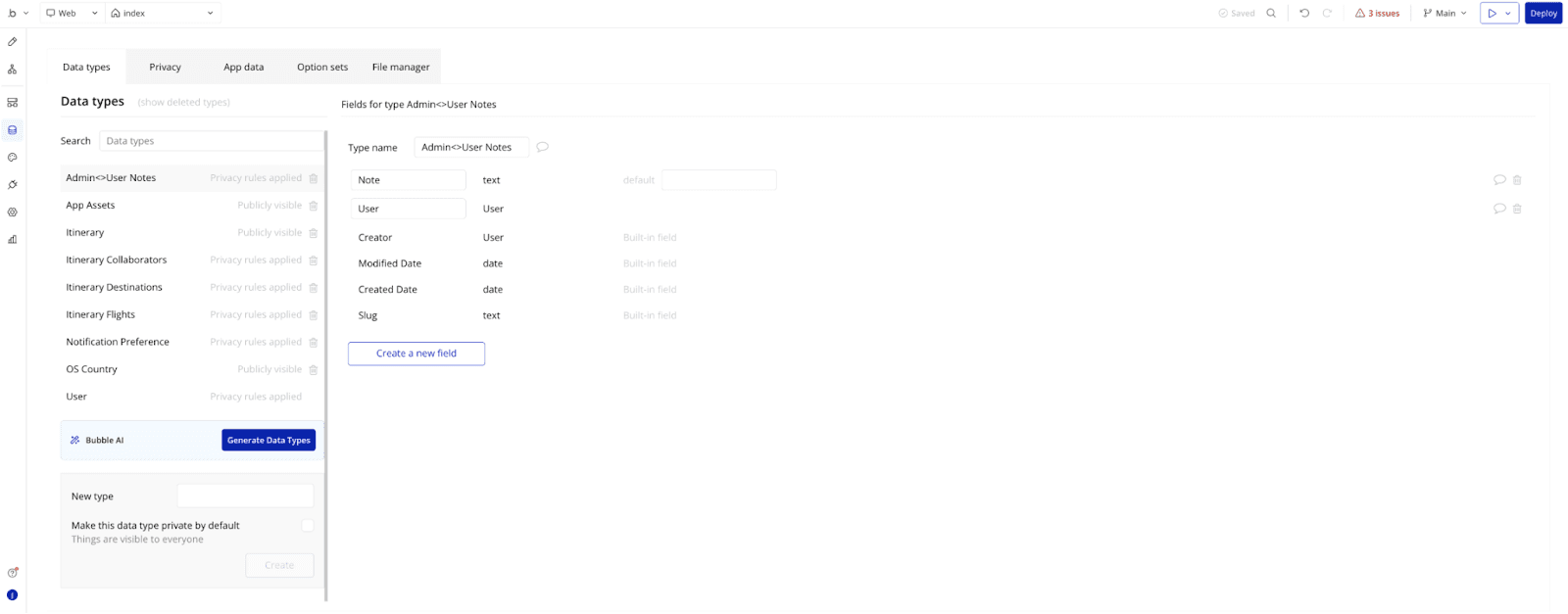
Integrated Database and Data Management: Bubble's internal database lets users organize and display listings, user profiles, transactions, and reviews dynamically. Its privacy rules allow granular access controls (e.g., sellers see only their own sales).
Workflow Automation: Bubble enables backend logic automation - such as sending confirmation emails, triggering notifications on status changes, or matching buyers and sellers - via its visual workflow editor.
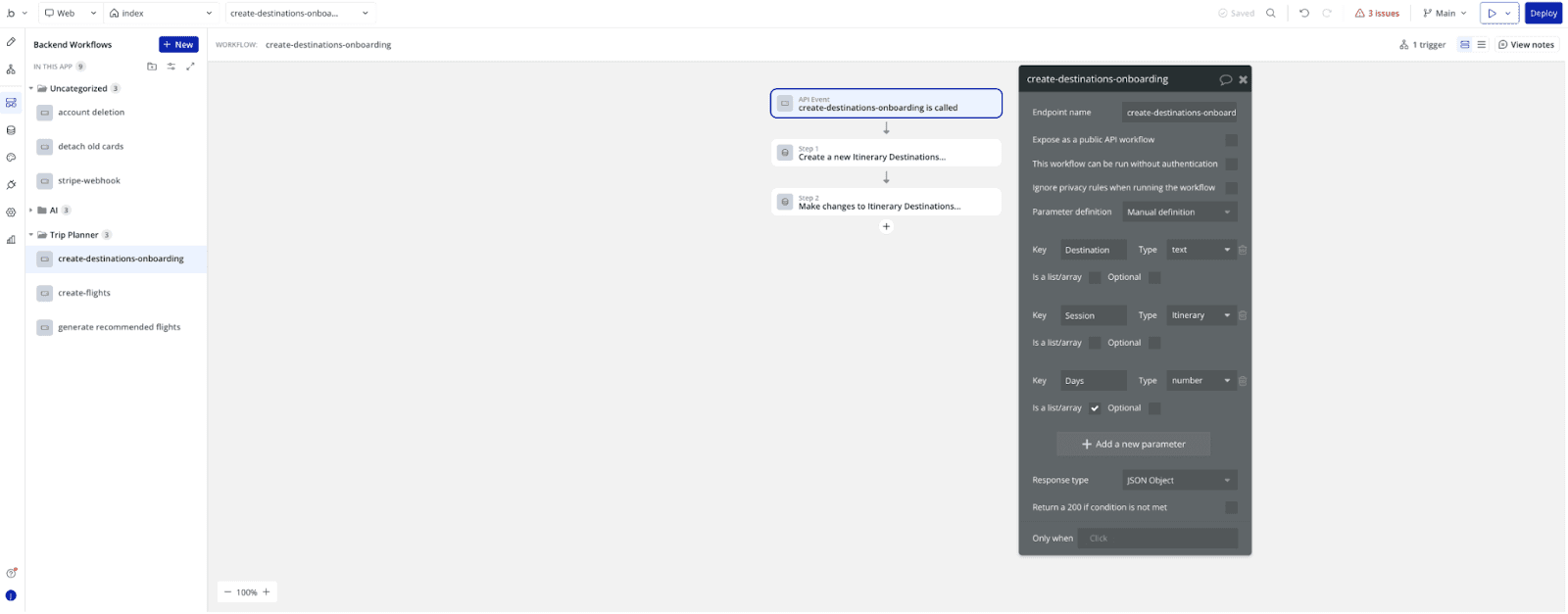
API and Plugin Integrations: Bubble supports RESTful API integration and a marketplace of community and official plugins, allowing easy integration of services like Stripe (for secure payments), Google Maps (for geolocation), or Twilio (for SMS).
User Authentication and Roles: Built-in tools manage user sign-ups, logins, and permissions. You can define user roles (e.g., buyers vs. sellers) and conditionally display content or enable actions based on those roles.
Book a free consulting call with Goodspeed
Types of Marketplaces You Can Build with Bubble
Global retail e-commerce sales are expected to reach approximately $7.4 trillion in 2025, with marketplaces capturing an increasing share of that spend. For founders building marketplace products, the opportunity is significant and growing. Bubble is flexible enough to support multiple marketplace models. Here are the most common types and what makes each one work.
Two-sided service marketplaces. Think Airbnb, Upwork, or Thumbtack. Buyers search for services, sellers list availability, and the platform handles booking, payments, and reviews. Bubble's workflow engine manages the matching logic, while Stripe Connect handles payment splits between platform and provider.
Product marketplaces. Think Etsy or Depop. Sellers list physical or digital products, buyers browse and purchase, and the platform takes a commission. Bubble handles product catalogs, inventory display, checkout flows, and seller dashboards.
Event ticketing platforms. Organizers create events, set ticket types and pricing, and buyers purchase tickets. Bubble manages the event creation workflow, seat/ticket logic, and payment processing. This model appeared in GSC queries ("best no-code for event ticketing marketplace") and represents real search demand.
Rental and booking platforms. Property rentals, equipment rental, or car-sharing platforms where availability calendars, booking logic, and security deposits are central. Bubble's date-based workflows and conditional logic handle availability and booking conflicts.
Recruitment and job board platforms. Employers post jobs, candidates apply, and the platform manages matching, applications, and communication. Bubble's recruitment capabilities include role-based dashboards, application tracking, and notification workflows.
Airbnb-like complex marketplaces. Multi-step booking flows, host/guest communication, review systems, location-based search with Google Maps integration, and calendar-based availability. These are among the most complex marketplace builds but are fully achievable on Bubble with experienced architecture.
Each marketplace type has unique data modeling requirements. The agencies that build them well are the ones that design the database structure before touching the UI.
Book a free consulting call with Goodspeed
Planning a marketplace and not sure which model fits? We have built marketplace products across service, product, and recruitment platforms. Book a free consultation and we will help you scope the right approach.
Our Evaluation Framework
We evaluated agencies based on their ability to deliver robust marketplace apps on Bubble, focusing on features like user matching, transaction handling, and scalable growth. Here are the key criteria used for ranking:
Expertise in Marketplace-Specific Functionalities. We prioritized agencies with demonstrated experience in building core marketplace elements such as two-sided user interfaces, search and filtering capabilities, and user-generated ratings or reviews, ensuring seamless buyer-seller interactions without requiring custom code.
Proven Track Record with Similar Projects. Agencies were ranked higher if they had previously launched functioning marketplace applications on Bubble, supported by publicly available case studies or testimonials that show measurable outcomes across marketplaces involving listings, bookings, or e-commerce.
Scalability and Performance Optimization. Top picks showcased an ability to support scalable growth on Bubble, including optimized database structuring, efficient workflows, and responsive design implementation. These elements are essential for transitioning an MVP into a production-grade app capable of handling increased user and transactional load without significant performance degradation.
Integration with Essential Tools. We assessed capability in integrating Bubble apps with key third-party services used by marketplaces, including widely adopted payment processors like Stripe, mapping services such as Google Maps, and analytics platforms like Google Analytics or Mixpanel. These integrations are necessary for enabling secure transactions, navigation features, and data insights for performance monitoring and monetization strategies.
Client Collaboration and Post-Launch Support. Rankings favored agencies that offer iterative development processes, deploy updates via Bubble’s version control, and provide ongoing support packages. This includes timely bug resolutions, roadmap-driven feature enhancements, and client enablement through backend training to facilitate effective app management by non-technical users.
Cost-Effectiveness and ROI Focus. We evaluated agencies based on clear and upfront pricing structures that align with the typical cost expectations within the no-code ecosystem. Preference was given to those that delivered functioning MVPs quickly while emphasizing long-term return on investment by minimizing custom code and leveraging Bubble
Top 5 Bubble Agencies for Marketplace
Goodspeed
We are top-tier Bubble agency renowned for building scalable, investor-ready marketplace apps with remarkable speed and precision. Our structured sprint-based approach (typically 4–8 weeks) enables founders to launch fast while covering the full spectrum of marketplace features - from two-sided user dashboards and dynamic search to Stripe-powered transactions, review systems, and role-based access.
Our portfolio spans a wide variety of verticals: e-commerce platforms, housing and land marketplaces, contractor directories, classified listings, influencer networks, and mentorship platforms.
As Bubble’s 2024 Agency of the Year, we are known for combining clean UX with scalable architecture and advanced integrations (Stripe, Google Maps, Mixpanel, Zapier, and custom APIs). Post-launch, we offer iterative sprint cycles, backend training, and performance tuning ensuring long-term success without vendor lock-in.
With async collaboration via Slack and ClickUp, a strong ROI focus, and deep Bubble expertise, we are an ideal partner for ambitious teams looking to validate and scale two-sided marketplaces without the cost or complexity of traditional development.
Notable Build - SummerMatch (AI-powered dating and social connection marketplace MVP, later acquired)
AirDev
AirDev is one of the most established Bubble agencies, trusted for delivering enterprise-grade marketplaces with speed, structure, and scalability. Their proprietary Canvas framework streamlines development while ensuring consistency, performance, and modular reusability.
They’ve built platforms across sectors - from booking systems and gig networks to B2B SaaS tools - many of which serve tens of thousands of users. Their approach combines scalable database architecture, clean workflows, responsive design, and robust third-party integrations. If you’re building a marketplace and want a rock-solid foundation from day one, AirDev brings the experience and execution to make it happen.
Notable Build - TicketRev (ticket resale marketplace that raised $1.1M shortly after launch)
Rapid Dev
Rapid Dev is a Bubble-focused development agency known for turning complex product ideas into fully functional AI-powered applications. They excel at building platforms that combine intelligent automation with intricate booking flows, vendor dashboards, and multi-party payment setups.
Their process prioritises speed without sacrificing quality: they run structured sprints, use proven Bubble patterns for scalability, and integrate advanced solutions such as AI-driven recommendations, chatbots, and predictive analytics. They also handle secure payment workflows, including Stripe Connect for commissions, payouts, and compliance.
Notable Build – Ferrodot (B2B metal plates marketplace built in 12 weeks, localized for Korean users, now serving a growing user base)
Book a free consulting call with Goodspeed
HuggyStudio
HuggyStudio is a Swiss no-code studio that blends product strategy, UX design, and Bubble development to ship high-quality MVPs and production-grade platforms. They’re especially strong in marketplaces that connect experts, coaches, or service providers with clients, where onboarding flows and matching algorithms are key.
They bring a lean, hands-on approach: from rapid prototyping to iterative feature releases, their team ensures you validate and scale efficiently. Their experience includes multi-vendor service platforms and marketplaces with complex scheduling and communication features.
For founders who want a marketplace that’s both user-friendly and strategically designed for growth, HuggyStudio offers the precision and care to make it happen.
Notable Build – ideamix (online coaching and mentorship marketplace)
Zeroqode
Zeroqode is a veteran Bubble agency known for launching marketplaces at speed, backed by one of the largest no-code ecosystems - 500+ plugins, templates, and native wrappers.
They’ve delivered over 300 custom projects, including parenting platforms, education portals, mobile-first booking apps, and local classifieds. Many of their builds start from flexible, pre-built templates that they customise to fit complex use cases integrating dashboards, search, Stripe payments, maps, and more.
Notable Build – EzyCourse (digital products and course marketplace built using their template and custom dev)
Feature | Goodspeed | AirDev | Rapid Dev | Idea Link | Zeroqode |
Multi-Vendor Payments (Stripe Connect) | Yes | Yes | Yes | Yes | Yes (via plugin) |
Search & Filter UX | Custom-built | Canvas framework | Template-based | Custom-built | Plugin-based |
Review Systems | Custom | Custom | Basic | Custom | Plugin |
Two-Sided Dashboards | Yes | Yes | Yes | Yes | Limited |
Post-Launch Marketplace Support | Structured sprints | Available | Limited | Available | Plugin updates |
Marketplace Case Studies | BunkerEx, Pockla | Teach For America | ChurchSpace | Open Infra | Multiple |
Book a free consulting call with Goodspeed
Want a marketplace built for real users, not a demo? We designmarketplace architectures that handle payments, matching, and scale from day one.Let's talk.
Case Study: Ohana Subletting Marketplace
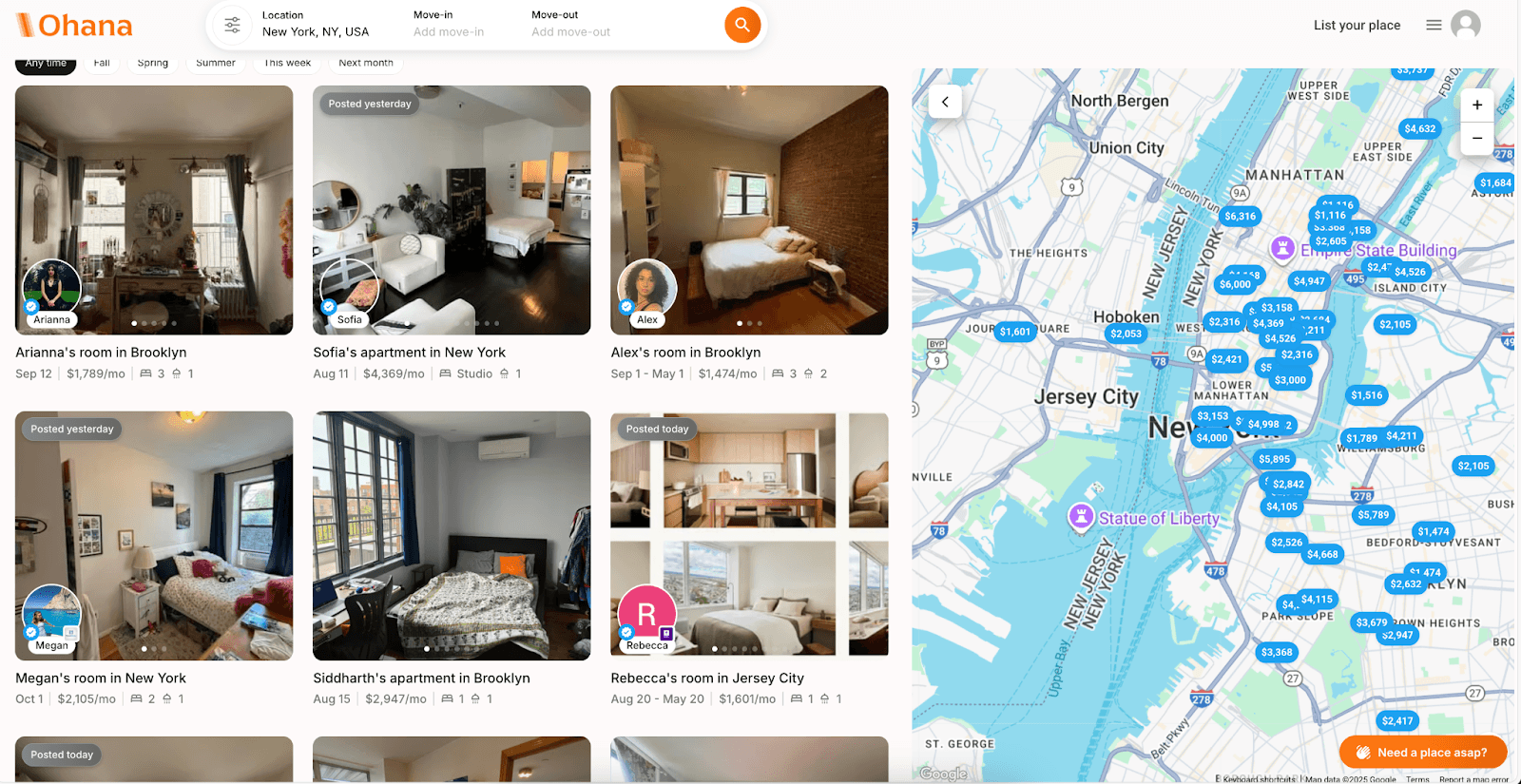
Ohana is a subletting marketplace built on Bubble that connects homeowners with temporary employees looking for short-term stays. In just 14 months, the platform achieved ninefold year-over-year revenue growth, scaling from around $200,000 in 2024 to a projected $1.5 million, while also reaching profitability. This rapid growth was fueled by favorable shifts in New York City’s short-term rental regulations and a successful $3 million funding round from former Airbnb executives.
Book a free consulting call with Goodspeed
Cost & Timeline Benchmarks
When building a Marketplace with Bubble, costs and timelines vary based on complexity, features, and development approach.
For a simple MVP, the focus is on core functionalities like user listings, basic search, and simple transactions, often achievable with Bubble's built-in tools. Mid-complexity builds add elements like user profiles, ratings, and payment integrations. On the other hand, complex scalable versions include advanced features such as third-party integrations, multi-vendor support, real-time notifications, and performance optimization to support high user traffic.
These tiers assume professional development; self-building reduces costs but extends timelines due to the learning curve.
Key factors influencing cost include the use of premium plugins, API integrations (e.g., Stripe for payments or external databases, potentially increasing development time by 20–40%), and team composition (a solo developer versus a team including designers and testers, which may double costs due to quality assurance efforts).
Custom workflows, compliance with data privacy regulations (like GDPR), and scalability needs (e.g., accommodating thousands of concurrent users) also increase expenses, as these require additional testing, infrastructure setup, and iteration.
Tier / Complexity | Typical Features | Timeline |
MVP / Basic | Listings, simple auth, basic forms | ~4–6 weeks |
Mid‑complexity | User profiles, payment integration, CMS, dashboards | ~8–12 weeks |
Feature‑rich / Scalable | Real‑time chat, AI/ML, heavy integrations, multi‑roles | ~16–24 weeks |
Implementation Checklist
Scope the Project: Define the core features of your Marketplace, such as user roles (buyers/sellers), listings, and transactions.
Key questions: What problem does it solve? Who is the target audience?
Deliverable: A high-level project brief or MVP feature list.Plan the Data Structure: Map out Bubble's database with types like users, products/items, orders, and reviews.
Key questions: What data relationships are needed (e.g., one-to-many for listings)? Deliverable: A data schema diagram or Bubble data type setup.Design the UI/UX: Create responsive pages using Bubble's visual editor for sign-up, dashboard, search, and profiles.
Key questions: How will navigation flow for buyers vs. sellers?
Deliverable: Wireframes or initial page layouts in Bubble.Set Up User Authentication: Implement secure sign-up/login with email, social logins (e.g., Google, Facebook), and configure privacy rules in Bubble.
Key questions: What user permissions are required (e.g., sellers edit listings)?
Deliverable: Configured authentication workflows and privacy settings.Build Core Workflows: Develop backend logic for actions like posting listings, searching, messaging, and processing payments using Bubble's workflow editor.
Key questions: How will transactions handle approvals or disputes?
Deliverable: Functional workflows for key user interactions.Integrate External Services: Connect APIs for payments (e.g., Stripe), emails (e.g., Postmark or SendGrid), or location services (e.g., Google Maps) if needed for your marketplace.
Key questions: What third-party tools enhance functionality?
Deliverable: Tested integrations within Bubble.Test Thoroughly: Conduct unit tests, user testing, cross-browser and cross-device compatibility checks, and bug fixes. Simulate real scenarios like buying/selling.
Key questions: Does it handle edge cases (e.g., failed payments, expired sessions)? Deliverable: A testing report with resolved issues.Launch and Monitor: Deploy the app using Bubble’s built-in hosting, connect a custom domain, and integrate analytics tools (e.g., Google Analytics or Mixpanel) post-launch.
Key questions: What metrics will measure success (e.g., active users, conversion rate)? Deliverable: Launch plan including marketing and initial monitoring setup.
Ready to turn your Marketplace Apps idea into a validated, launch-ready reality? Book a free strategy call with our team today for personalized guidance tailored to your goals, helping you streamline validation and map out clear launch steps.
Book a free consulting call with Goodspeed
We are a Gold Certified Bubble agency with a 5.0 Clutch rating and deep marketplace experience. See our case studies and book a free consultation.
Conclusion
Building a marketplace on Bubble works. The platform handles two-sided user flows, Stripe Connect for payment splits, search and filter logic, and the review systems that build trust between buyers and sellers.
The difference between a marketplace that gets traction and one that stalls is usually the architecture underneath. Payment flows that break, search that returns irrelevant results, or a database that slows down at 500 listings are problems that come from building without marketplace-specific expertise.
We are a Gold Certified Bubble development agency with a 5.0 Clutch rating and back-to-back Agency of the Year awards. We have built marketplace products across service platforms, product marketplaces, and recruitment tools. See our case studies for real examples.
If you are building a marketplace on Bubble, book a free consultation and let's get the architecture right from the start. Or try our Signal Sprint to scope, model, and plan before committing to a full build.
Every week spent with an agency that does not understand marketplace architecture is a week your competitors use to capture your market.

Harish Malhi
Founder of Goodspeed
Harish Malhi is the founder of Goodspeed, one of the top-rated Bubble agencies globally and winner of Bubble’s Agency of the Year award in 2024. He left Google to launch his first app, Diaspo, built entirely on Bubble, which gained press coverage from the BBC, ITV and more. Since then, he has helped ship over 200 products using Bubble, Framer, n8n and more - from internal tools to full-scale SaaS platforms. Harish now leads a team that helps founders and operators replace clunky workflows with fast, flexible software without writing a line of code.
Frequently Asked Questions (FAQs)
Can You Build a Marketplace on Bubble?
Yes. Bubble supports two-sided user interfaces, listings, search and filter, Stripe Connect for payment splits, reviews, and role-based access. Most marketplace MVPs ship in 6 to 12 weeks on Bubble.
How Long Does It Take to Build a Marketplace App?
MVPs take 6 to 12 weeks. Complex marketplaces with custom matching, location-based search, and multi-step booking flows take 3 to 4 months. Timeline depends on marketplace model and agency experience.
What Is the Best Bubble Agency for Marketplaces?
We are ranked #1 with 200+ apps delivered, Gold Partner status, and marketplace case studies including BunkerEx. We build marketplace architecture designed for scale from day one.
How Much Does a Bubble Marketplace Cost?
Marketplace builds range from $10K for simple listing platforms to $60K+ for complex two-sided marketplaces with payment splits, search, and review systems. This is 5x to 10x cheaper than traditional development.
Can Bubble Handle Stripe Connect for Marketplace Payments?
Yes. Bubble supports Stripe Connect through the Stripe.js plugin or API Connector. This enables platform fees, split payments between buyers and sellers, and multi-vendor payout management.
What Types of Marketplaces Can Bubble Build?
Service marketplaces (like Airbnb), product marketplaces (like Etsy), job boards, event ticketing platforms, rental platforms, and recruitment marketplaces. Bubble handles all common marketplace patterns.
Is Bubble Good for E-Commerce?
For marketplace-style e-commerce with multiple sellers, yes. For traditional single-store e-commerce with heavy inventory management, platforms like Shopify may be more appropriate. Bubble excels at custom marketplace logic.
What Is the Best No-Code Platform for Marketplaces?
Bubble is the strongest no-code platform for marketplace development due to its visual database, workflow engine, Stripe Connect support, and API integrations. Alternatives like Sharetribe are simpler but less flexible.